What is Generative Engine Optimisation (GEO) and Why Does It Matter?

What is generative engine optimisation?
Generative Engine Optimisation (GEO) is the strategy of optimising your content to be more discoverable in AI-powered search tools like ChatGPT, Gemini, and Google’s AI Overviews.
While traditional search engines give users a list of links, AI search tools make it simpler and faster for users by generating “new” content or summaries of existing web content. It does this by pulling information from multiple sources and answering in a natural language.
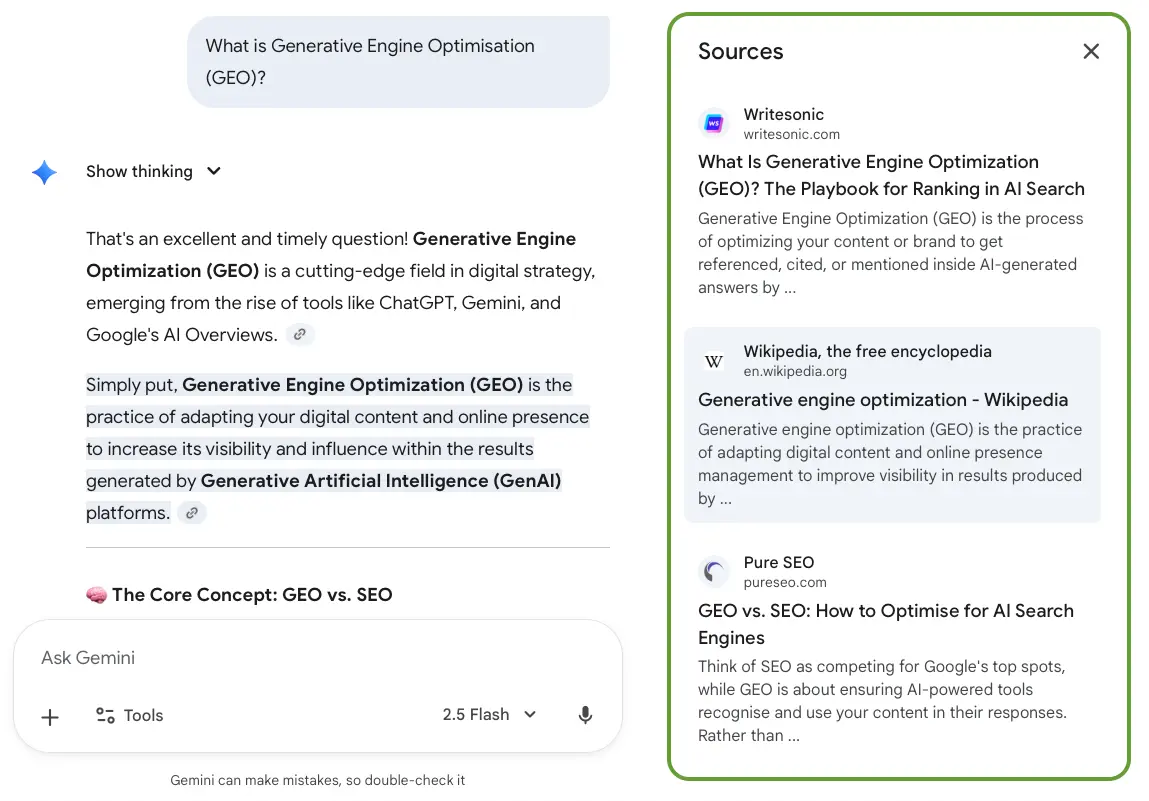
For example, consider the difference between a conventional Google Search and an AI search via Gemini for this same query, “What is GEO?”.
Here’s what a traditional Google search result looks like:

Now compare that with how Gemini AI responds:

You no longer need to sift through multiple websites to piece together the answer yourself.
Why bother when AI can now synthesise summaries and answers directly to you?
For websites and brands being referenced or mentioned by AI, this is what they now call "zero-click visibility”.
And if you want to dig deeper, sources are directly available for you to click and read more.
According to a Statista report, approximately 15 million adults in the United States have used generative AI as their primary tool for online search over the last 18 months. This number is expected to double, to over 36 million users by 2028.
To make sure your website is optimised to be shown for AI search, it helps to understand how these generative and LLM systems "think".
How do AI generative engines work?
More than just skimming for matching terms, generative AI breaks down your question, hunts for relevant insights, and pieces together an original answer on the spot.
Each query gets transformed
When you type a detailed question into AI tools like ChatGPT or Perplexity, the AI doesn’t tackle the whole thing at once. Instead,
- AI LLMs break the data into manageable sections (essentially mini-queries) that each run through its model.
- Depending on the tool, that process might involve tapping into its own training data or pulling in real-time information from the web.
- Once it’s gathered the relevant bits, the model distills what it finds and writes back in its own words.
So you can ask long questions, sometimes even whole paragraphs, and get a coherent answer. The model handles the complexity behind the scenes by breaking that input into bite-sized chunks it can chew.
Perplexity even shows you how it works in real time. It runs multiple background searches and provides links to its sources so you can see where the information came from.
ChatGPT’s o3 model also lifts the curtain a bit, showing you how it’s thinking through a question as it builds an answer.
→ Why this matters: Write content that answers specific questions, not just broad topics. AI engines pick and reassemble the clearest, most relevant pieces of information.
Not all engines are created equal
Each generative engine has its own way of working.
Some rely on fresh web content, while others depend on pre-trained data. Some use their own crawlers, while others utilise third-party search engines.
As such, asking the same question on different platforms can give you entirely different answers.
Even when sources are cited, they’re not the same from one engine to another.
→ Why this matters: If you’re optimising your content for generative search, you may need to cast a wider net. Make sure your brand’s content is consistent and technically clear across your website, blog, and authoritative platforms like LinkedIn, YouTube, or trusted publications.
Every Answer Is Built From Scratch
Unlike traditional search engines that point you to existing web pages, generative AI creates answers on the fly.
It doesn’t copy text from a database; it generates new language every time, based on patterns in the information it’s been trained on or retrieved in real time.
And when personalisation is turned on, the results can change even more based on your past searches or preferences. So each interaction is a little more unique and a little more unpredictable.
→ Why this matters: To be reused in AI-generated answers, write content that is technically sound and current. Use clear headings, schema markup, verified facts, and regular updates that signal ongoing authority.
Why GEO is crucial for your brand’s visibility and revenue
Beyond the convenience AI search gives today’s users, these LLMs also now define brand visibility, trust, and marketing transformation.
80% of users now turn to AI because of a better search experience
Once you try an AI that writes, explains, or summarises better than a top-ranked Google link, it’s hard to go back.
AI search tools give you direct answers, requiring zero clicks.
No wonder why 80% of search users now turn to AI summaries for quick answers about 40% of the time.

This doesn’t mean that generic search is becoming obsolete. But AI search simply offers a better search experience.
And the experience difference is justifiable.
In a traditional search, for example, you have to go through up to a list of 10 websites to find the right answer. If you’re not satisfied with the site you just opened, you have to go back to the list and find another source. Then, repeat the process until you get the one that satisfies your search intent.
But with an AI search, you don’t have to click anywhere. LLMs understand your intent, search through multiple sources on your behalf, and synthesise a direct answer for you – in plain natural language.
Want to dig in more? Simply choose from the cited sources and know more from their website’s content.
These smarter AI tools and models are showing up in our everyday tools, making the switch to generative AI for search feel more natural.
OpenAI, Google, Anthropic, and others, AI is now built into:
- Browsers (e.g., Arc, Microsoft Edge with Copilot)
- Smartphones (e.g., Android Gemini Assistant, iOS Shortcuts)
- Productivity tools (e.g., Notion AI, Microsoft 365 Copilot)
- E-commerce and social media platforms (e.g., Amazon, TikTok, Facebook’s Meta AI)
And this isn’t a mere trend. In a recent Semrush blog about the AI search study, their first finding is that AI Search will surpass conventional search by 2028.
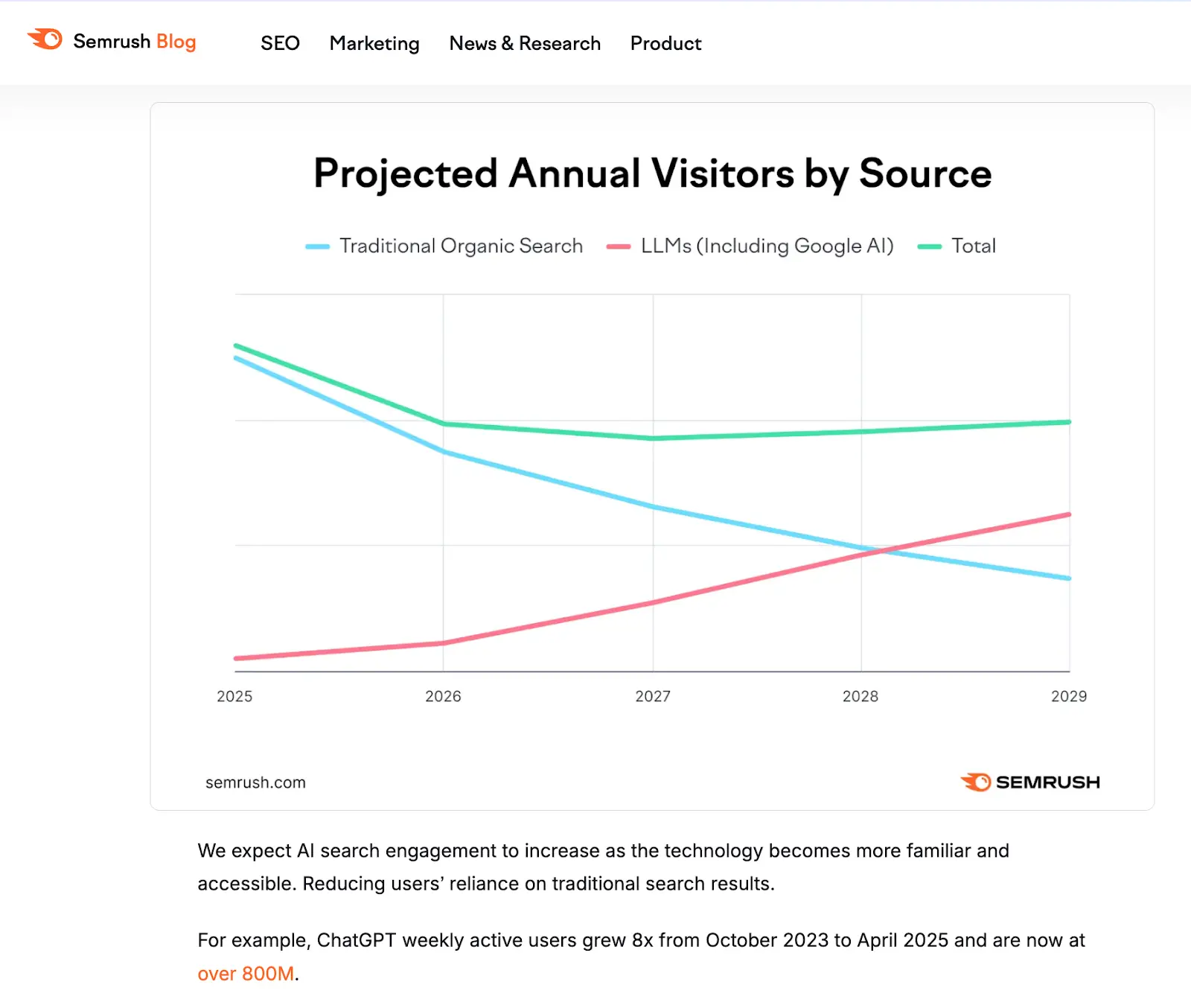
Why should your business care?
You want your brand to stay and become more visible even beyond 2028. And to do so, you have to appear where the users are searching.
Google Search is not leaving, but AI search (or GEO) is giving you an additional discoverability channel.
Think of this: if your content is among the AI-cited sources when your target market is looking for a solution you provide, your brand appears in a conversation even if a user never visits your site.
To stay visible in the evolving landscape of search, you need to understand how to have your business website cited by AI LLMs.
When AI trusts you, so do people
Being cited by ChatGPT, Google AI, or Gemini is a signal of credibility.
When an AI system highlights your content as a trusted source, it’s essentially saying to the user: “This brand knows what they’re talking about!”
That kind of implicit endorsement builds trust instantly, especially in crowded or competitive markets.
What’s interesting is how today’s users are now using AI tools to be their personal assistants, offering advice, answering complex questions, and even recommending products based on individual preferences.
The AI statistics report by Exploding Topics confirms that ‘user trust’ with survey data referenced below.

The fact that users now rely on AI search tools in making personal life decisions implies how much AI can also influence their buying decisions. Which is why the risk of ignoring GEO is no longer theoretical.
Top-performing companies are now adopting the AI trend
According to PwC’s Cloud and AI Business Survey, “63% of top-performing companies are increasing cloud budgets” specifically to leverage generative AI capabilities.
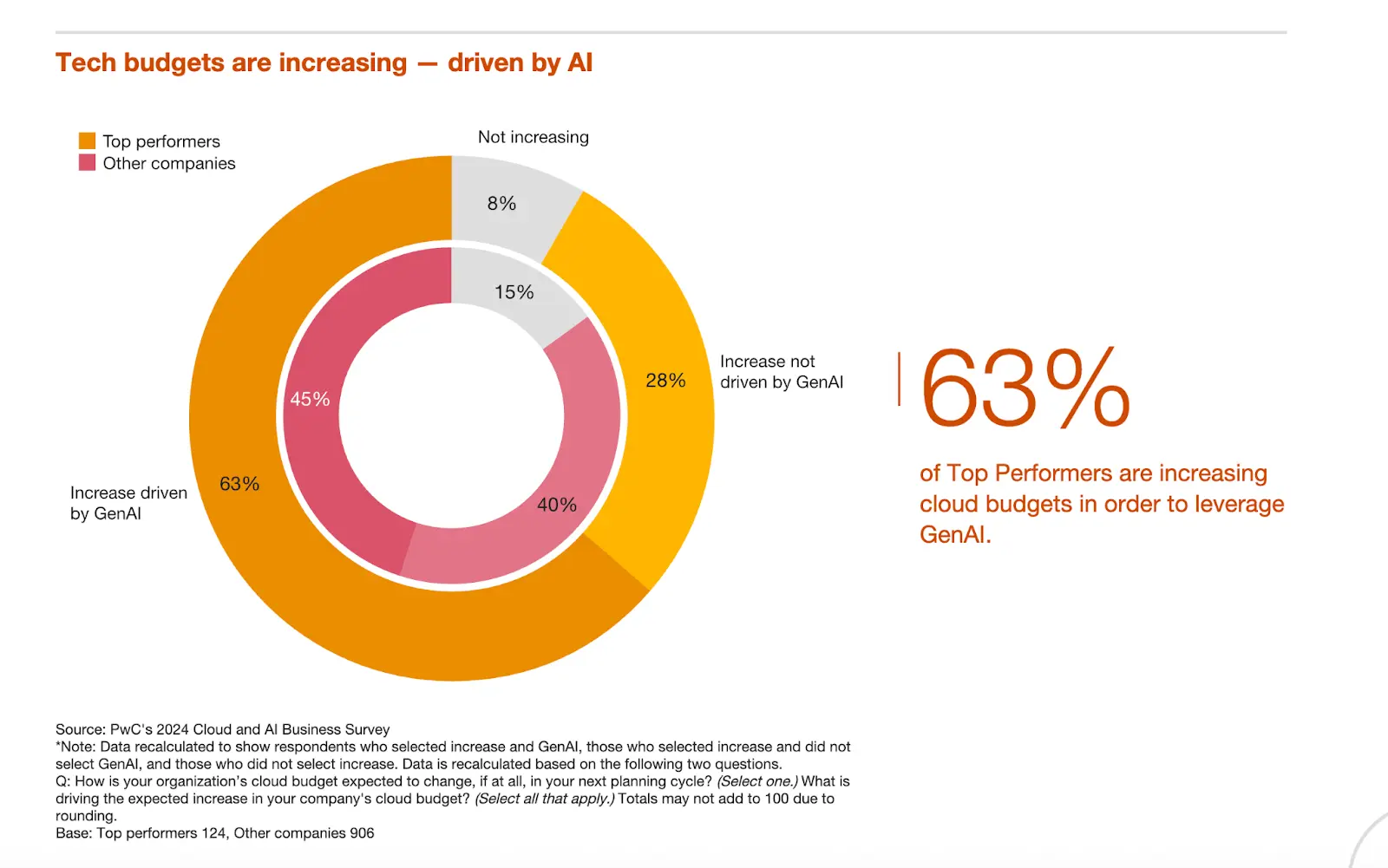
This shift means more than just a tech upgrade. It’s a visibility play.
These leaders are investing early to make sure their brands show up where today’s customers are asking questions: inside AI-powered search tools.
And here’s where the gap widens.
If your brand isn’t discoverable through ChatGPT, Gemini, or Perplexity, your competitors are. And they’re the ones your audience is discovering and trusting first.
A recent Semrush study drives this home: 50% of all links cited by ChatGPT 4o point to business or service websites— not blogs, not Wikipedia, but commercial brands users are ready to buy from.

This means people aren’t just using AI to learn.
People are now using AI to decide, guiding them which products to trust, which tools to try, which companies to believe.
What GEO means for your business in 2026 and beyond
The shift to AI-driven search isn’t coming. It’s already here.
To stay competitive and visible, your website needs more than great content. Structure it for AI systems to read, understand, and trust.
Generative Engine Optimisation (GEO) is the next evolution beyond traditional SEO. While SEO helps you rank on Google, GEO ensures your content shows up directly inside AI-generated answers, including ChatGPT responses, Perplexity results, and Gemini citations — the new front page of search.
And that visibility depends on how your website is built. AI engines don’t just crawl text; they read your site structure, schema markup, and technical clarity to decide which sources to cite.
A fast, well-organised, mobile-friendly site signals authority and gives AI every reason to choose you over competitors.
That’s why your technical foundation is now as important as your keywords.
A GEO-focused website review can pinpoint how to strengthen both, from improving crawlability and page experience to clarifying the signals that help AI systems trust your content.
Want to see where your site stands?
Get a free website review, and within 3 to 5 business days, you’ll receive a personalised breakdown of your GEO opportunities, including technical fixes and content enhancements that could help your brand earn more AI citations before your competitors do.
FAQ
Which companies are most affected by GEO?
Companies that rely on organic traffic with purchase intent, like SaaS platforms, marketplaces, publishers, and service providers, are the most affected. If your business is seen as a trusted source for answers or solutions, GEO is key. The more competitive your industry is in search, the more important it becomes to adapt.
Do I need GEO if I already invest in SEO?
Yes. GEO builds on traditional SEO and adapts it for how AI search engines select and cite content. If SEO gets you ranking in today’s search results, GEO gets you in tomorrow’s AI-generated answers. It’s not a replacement but an evolution. You still need good content, but it must also be structured in a way that AI systems can easily understand.
What type of content benefits most from GEO?
Content that answers questions, summarises key points, or explains complex topics (like FAQs, guides, how-to, and landing pages) tends to perform best. AI tools pull from these formats. When your content is well-organised and up to date, it has a much higher chance of being cited in AI search results.
From Sydney, Australia with a decade in Asia, Kevin built his expertise driving product and growth at tech startups across fintech, logistics, consumer apps, and crypto. He founded SuperPresence with this expertise and passion, helping businesses create high-converting web experiences and digital growth strategies that drive real revenue impact.

Continue reading more expert-insights